
FRIDAY ARTICLES
The broken is usable
February 13, 2026 · Thomas Christensen
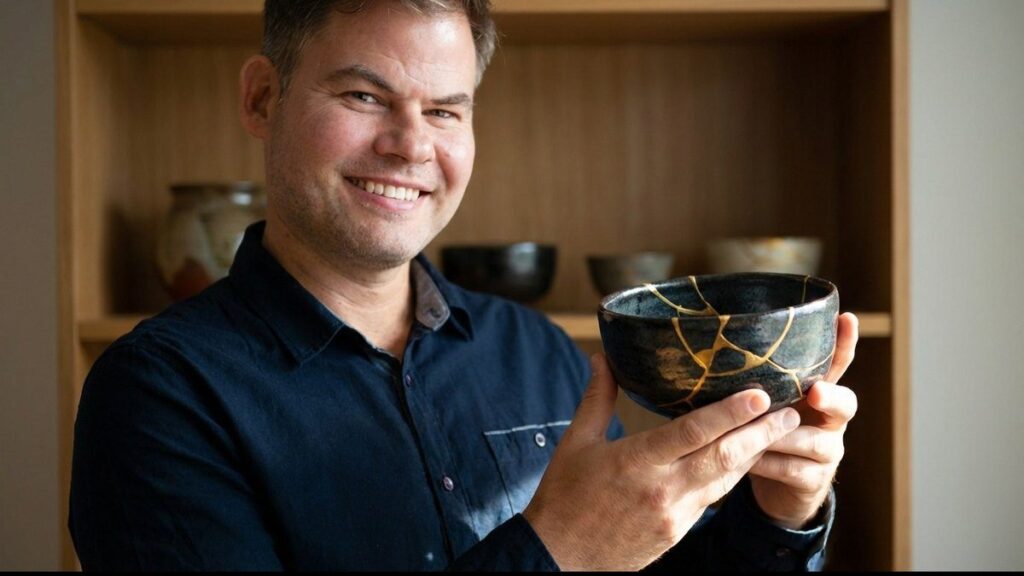
When God works with what we ourselves would call ruined
There are moments when something breaks.
And then there are moments when something feels ruined.
Not just damaged.
Not just knocked around.
But life took a turn we never thought it was supposed to take.
An accident that changed the body.
A divorce that split the family.
An affair that destroyed the trust.
A betrayal, a loss, a diagnosis, a decision you can never take back.
Something is ruined.
And it never becomes quite what it was before.
For many of us it isn't just something that happened.
It's something we live with.
And then the question surfaces – often without words:
Is there still something here that God can use?
When ruined feels like the end of the story
We live in a world that celebrates what works well.
The strong. What can perform and hold together.
When life is working, we feel invincible.
When something breaks, we start to duck our heads and pull back.
Not necessarily away from people – but away from hope.
Because who feels usable after an accident that changed everything?
Who feels called after a divorce they never wanted?
Who dares believe that God still wants to use them, after an affair – whether they were the one left or the one who failed?
Ruined often feels like disqualified.
Clay jars – not cast iron
Paul uses an image that lands on that exact experience:
"We are like fragile clay jars, in which a wonderful treasure has been placed. That way it can be seen that the overwhelming power comes from God and not from ourselves." 2 Corinthians 4:7
God could have chosen cast iron.
Something that can take a hit.
Something that doesn't give way, even when the pressure becomes overwhelming.
But he chose clay.
Something that cracks easily.
Something that can feel ruined after a collision, a break, a betrayal.
And that's exactly where the point lies.
Because when the clay jar cracks, it becomes impossible to fool yourself into thinking the strength comes from the jar itself.
God doesn't work around the accident, the break or the betrayal
We often have this idea that God can only use us once we've "gotten back on our feet."
Once we've got life under control.
Once the pain is processed, the relationships repaired, the story tidier.
But the Bible shows us something else.
God doesn't work around what's ruined.
He works through what's broken.
God doesn't abandon people at the place where life fell apart.
Kintsugi – a golden seam
Kintsugi is a Japanese art form where you don't hide the cracks in ceramics, but repair them with gold.
What had broken isn't just put back together.
It becomes both more beautiful and more valuable.
The crack isn't hidden.
It's highlighted.
What was once seen as damage now becomes the place the eye naturally rests.
Not as a problem – but as part of the bowl's identity.
The crack doesn't disappear.
It becomes part of the story.
A testimony that something broke – and wasn't thrown away.
It's an image that says something deep about the way God often works.
God isn't trying to hide your brokenness.
He isn't asking you to make the story prettier than it is.
He fills what cracked with his gold, his grace.
And maybe that's exactly where, in the crack, the bond becomes strongest.
That's how God often works.
He isn't trying to make your life look as if the accident never happened.
He isn't asking you to pretend the divorce didn't hurt.
He doesn't demand that you hide the betrayal that changed everything.
He fills it with grace.
God uses the imperfect, the fragile and the broken – not to exalt the pain, but to make one thing clear:
that it's his power carrying life forward, not ours.
My grace is enough for you, for my power is made perfect in weakness.
2 Corinthians 12:9
It doesn't mean that God wanted the pain.
But it means that the pain wasn't allowed to define the ending.
When God uses what we ourselves would throw away
We would so gladly have been without the accident.
Without the break.
Without the part of the story that can still hurt to tell.
What feels ruined to us is often the very place where we can no longer pretend we have it all under control.
And that's where God finds room.
Jesus – the broken one who brought life
In the end we always arrive here.
Not in theories.
Not in explanations.
With Jesus.
"He was pierced for our transgressions, crushed for our sins … by his wounds we were healed." Isaiah 53:5
The cross looks like total collapse.
Everything seems ruined.
Hope snuffed out.
The promise broken.
But the cross was not the end.
The resurrection reveals what no one could see that day:
God was not finished.
What looked like defeat became the beginning of new life.
What looked like total ruin became the place where salvation was completed.
And there's something deeply moving about this:
The scars on Jesus' body are the only man-made thing found in heaven.
They were not erased.
They were not hidden.
They were kept.
As an eternal testimony that love went all the way.
That the pain did not get the last word.
That the ruined became the place where life won.
With Jesus we see it most clearly:
God does not create life around what was ruined.
He creates life through it.
And so our story too – with all its cracks – can be carried home in hope.
Living on – without hiding the ruined
I still live with what didn't turn out the way I hoped. With limitations. With a body that carries the consequences. With a story that isn't "pretty."
In 2008 I was the victim of a botched operation.
It sent me into a hell of pain that took years to find any footing in. And even today – almost 20 years later – the nerve damage reminds me of it, especially when the cold bites and the pain becomes more insistent.
There was a time when I honestly believed my ministry life was over.
That I would never again be able to stand up front.
That I no longer had anything to give.
I felt ruined.
But it was not the end.
Slowly – very slowly – I learned something else.
That my life was not out of the game.
That my calling was not dependent on my strength.
That what I experienced as powerlessness was not a defeat, but a place where God could find room.
Today I know this:
If anything good, anything life-giving, anything upbuilding flows out of my life – when I get to serve, speak and minister to people far beyond anything I could have imagined – then it does not come from me.
Under no circumstances.
It comes from God. My life is marked. But it is full of grace.
And if that is true, then the broken is not what disqualifies us. It is often the very thing God chooses to use. Not to show how strong we are. But to show who He is.
And that is more than enough.
Has this stirred something in you? You are welcome to write to us — or simply come by on a Sunday. Say hello here.